
Why authorship verification belongs in an open network
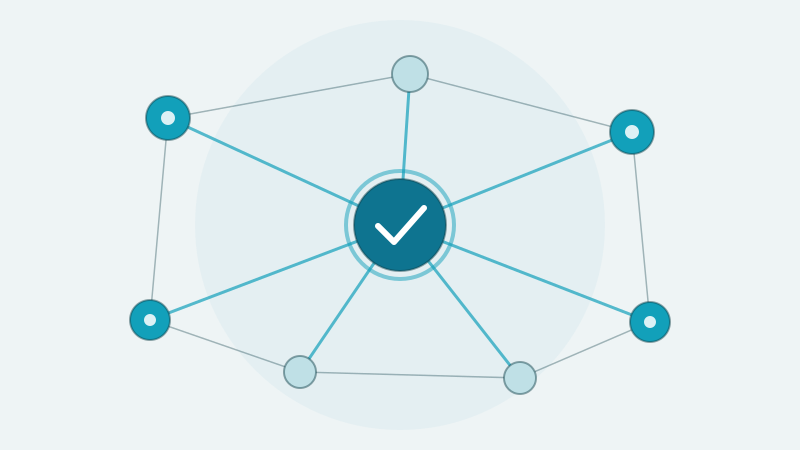
For a long time, confirming authorship rested on centralized intermediaries: registers, archives, notaries. That works, but a single keeper is also a single point of failure — you have to trust it, you have to go to it, and the record can disappear along with it.
What an open network changes
A record in a public blockchain is verified independently: anyone, given a code or an address, sees the date and immutability without asking the platform's permission. The proof stops depending on a single server or company.
How it works here
- The platform signs the facts with a key whose public part is published.
- The content fingerprint and the record are fixed in the network.
- Anyone can verify — by checking their file's hash and the signature, without taking the platform's word for it.
Why it is more robust
Openness does not remove the platform — it makes it verifiable. If the service ever disappears, the signed proof and the on-chain record remain, and authorship can still be confirmed.